Goals
- Preparing the introduction of AMRs to automate material handling between production lines and the warehouse
- Comparing different AMR technologies using real production data
- Determining the optimal number of AMRs, as well as the number and location of charging points
- Testing different operating logics and layouts in a parameterisable simulation environment
Challenges
- High investment risk without precise pre-investment capacity and performance data
- Need for an objective comparison of differing capabilities across AMR vendors
- How does the system behave under average and peak loads? How does reliability change under these conditions?
- Modelling complex material-handling routes alongside pedestrian traffic and dynamic obstacles
Solution
- Customisable, parameterisable simulation environment reflecting the real layout and processes of the customer’s production hall
- Real layout and data: 26 production lines, pallet handling with AMRs, logic based on MES data
- Dynamic path planning: collision handling and pedestrian-obstacle modelling
- Multi-vendor comparison: performance of Agilox and Hikrobot technologies under varying loads
Results
- With 3 AMRs: high utilisation; efficient in the short term, but less tolerant of exceptional situations
- With 4 AMRs: more stable operation, faster service, reserve capacity for sudden demand spikes
- Both examined vendors delivered similar performance; the decision is influenced by finer technical and integration aspects
- Reduced investment risk through capacity planning based on real data
- Flexible model that can adapt to future technology changes
The challenge: designing modern material handling with simulation
A domestic automotive manufacturer set out to introduce AMRs to automate intralogistics between production lines and the warehouse. Before deployment, the company commissioned a comprehensive simulation project to obtain an accurate picture of potential system performance, capacities, and the impact on manufacturing processes.
Project objectives:
- Assess the core technical capabilities of different AMR systems
- Determine the required robot count for optimal utilisation under both average and peak loads
- Test automated logistics processes in a simulation environment based on real production data
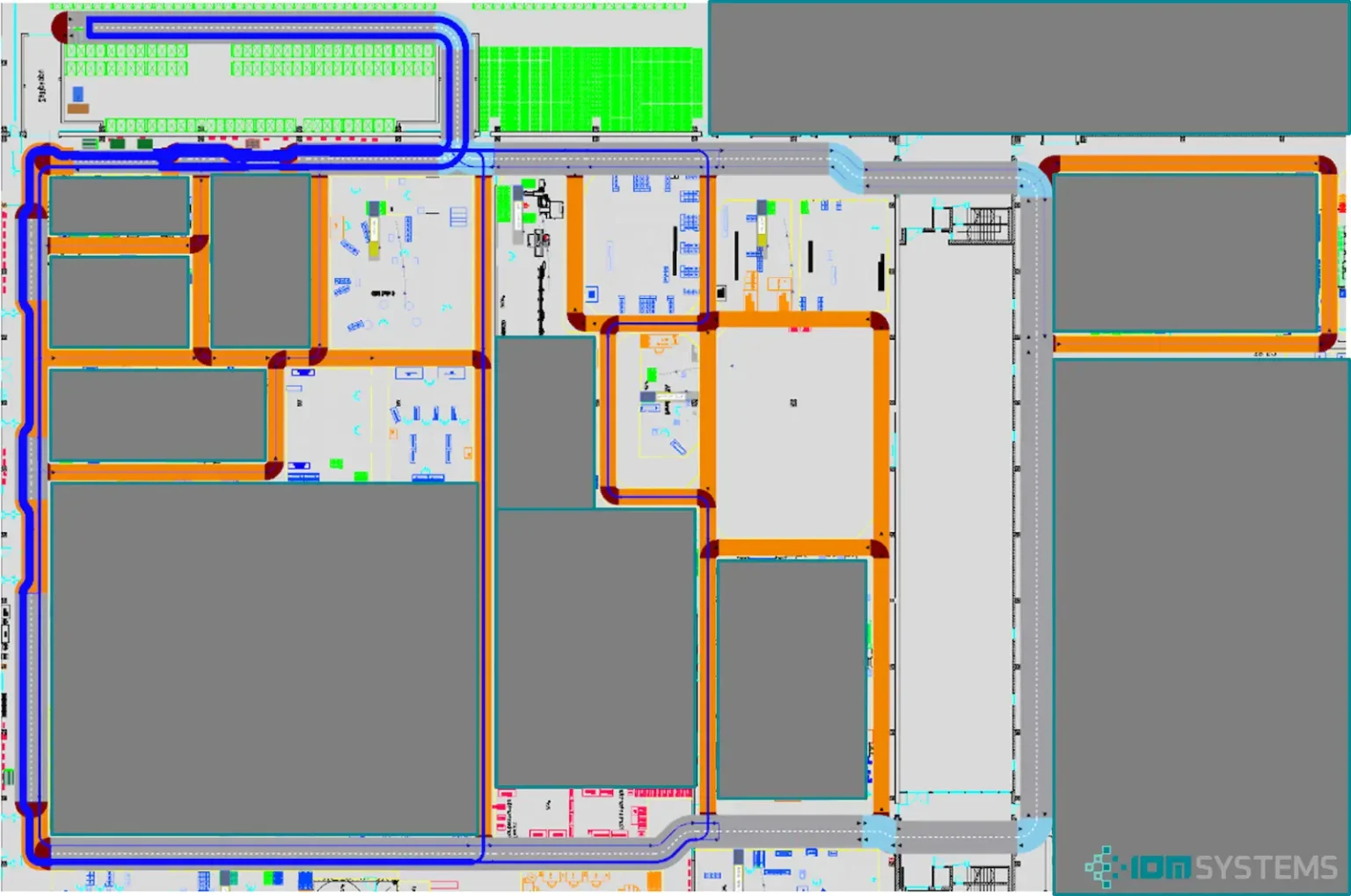
The following image shows a top-down view of the modelled plant with business-sensitive areas obscured. The blue overlay, using a Sankey diagram, indicates which route segments a given AMR uses and how frequently.
The stages of implementation
The simulation environment developed by IDM-Systems modelled the real layout and production processes of the hall. The aim was not to build a full digital twin, but to examine the key capacity and performance indicators.
Key characteristics of the simulation:
- Real line layout: 26 production lines; pallet handling with AMRs
- Logic derived from real MES (Manufacturing Execution System) data—faithfully following current production demand
- Collision handling, pedestrian-obstacle simulation, dynamic routing
- Customisable parameters: AMR count, charging time, priorities, traffic logic, etc.
Scenarios examined:
- 3 and 4 AMRs under different production loads
- Separate evaluations of Agilox and Hikrobot AMR vendors
- Analysis of peak and average operating states
- Testing different operating logics in the busiest zones
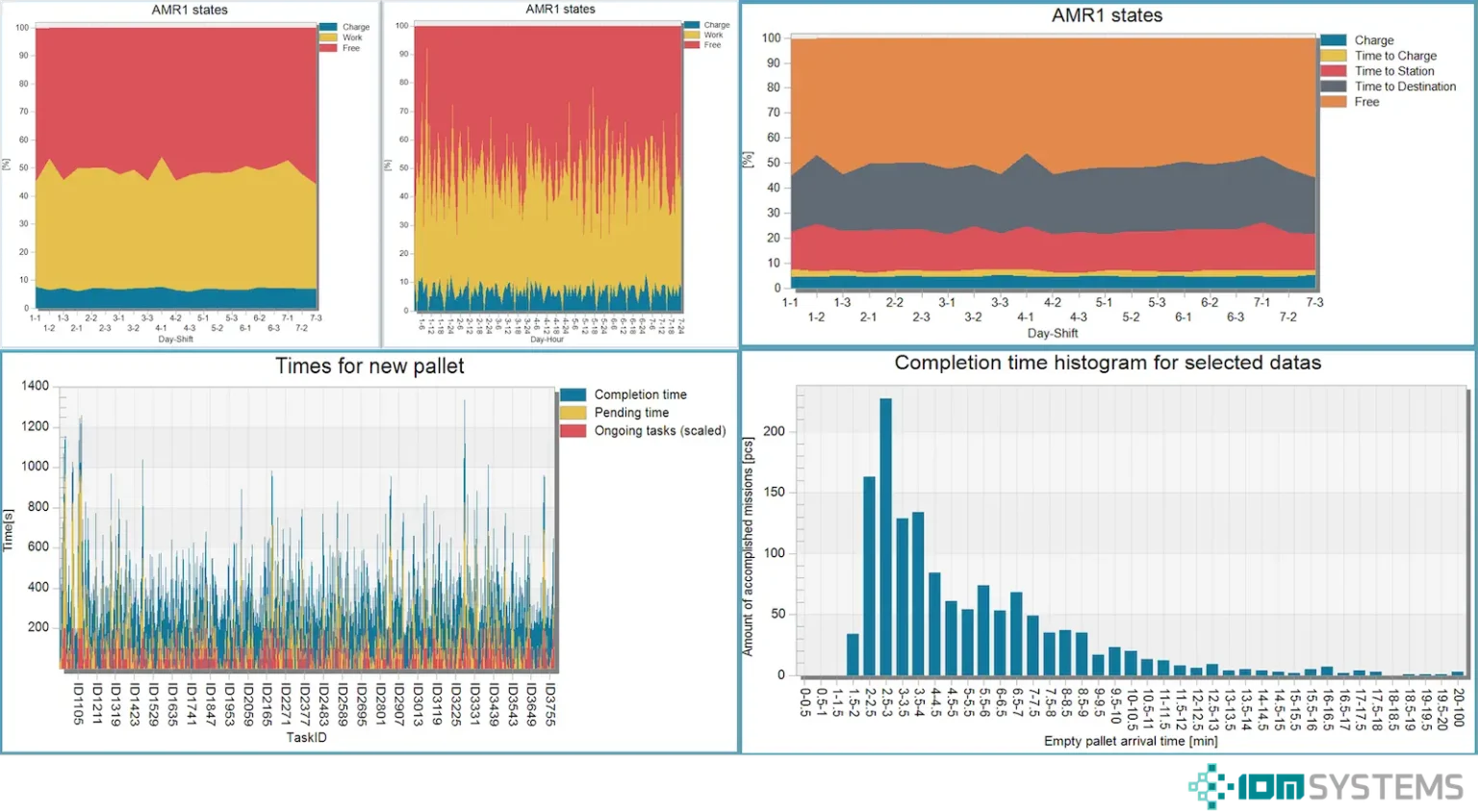
- For real-time monitoring, we displayed AMR status and key information so that each device could be tracked at any time during runs

The results: preparing well-founded investment decisions
Three realistic solutions emerged during the simulation:
- 3 AMRs: high utilisation, but longer recovery time after peak loads; lower fault tolerance
- 4 AMRs: more stable operation, lower utilisation, faster service times
- Similar performance was achievable with two different vendors; however, customer preferences regarding fine technical differences, integration options, and special functions (e.g., fire-alarm protocol) were decisive.
- It is important to note that the simulation examined only technical aspects; safety, maintenance, financial, and operational factors require separate analysis.
- Conclusions were drawn from multiple statistical indicators.
Next steps
At project close, IDM-Systems recommended on-site trials with the technology vendors so that the final decision could also be based on experience gained in the real production environment.
Why was this project outstanding?
- Accurate capacity planning based on real production data
- Parameterisable simulation environment providing flexibility
- Reduced investment risk through real performance data
- Effective collaboration with multiple technology partners
Project summary
- Client: automotive supplier
- Topic: simulation-based design and performance analysis of an AMR system
- Technology partners: two international AMR vendors; local system integrators
 Hungarian
 English
 German